What is the Federal Mileage Rate for 2025?
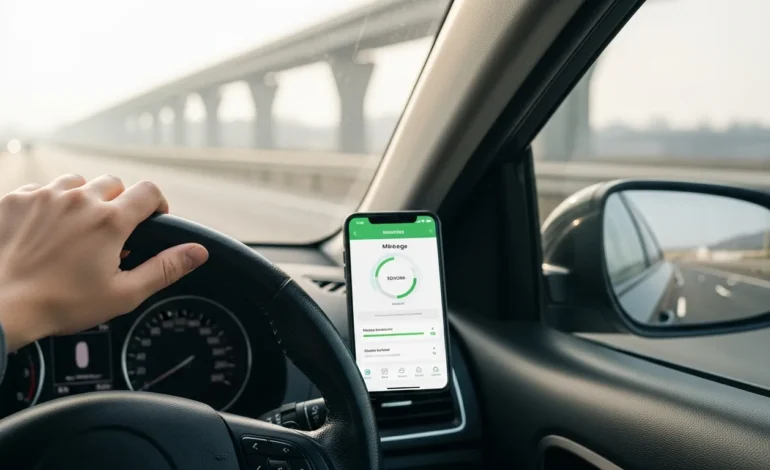
The official IRS federal mileage rate for 2025 is 70 cents per mile for business use. This rate represents a 3-cent increase from the 2024 level, reflecting the rising costs of vehicle ownership, including fuel, maintenance, and insurance. As millions of Americans participated in the National Travel Surge during the 2026 summer season, maintaining accurate historical records for the 2025 tax year remains a critical priority for self-employed individuals and business owners.
Breakdown of 2025 Standard Mileage Rates
The Internal Revenue Service (IRS) sets different rates based on the purpose of the travel. For the 2025 tax year, the rates are categorized as follows:
- Business Use: 70 cents per mile. This applies to self-employed individuals, 1099 contractors, and certain government officials.
- Medical Purposes: 21 cents per mile. This rate is used to calculate deductible costs for travel related to receiving medical care.
- Moving (Military Only): 21 cents per mile. This is restricted to active-duty members of the Armed Forces moving under a permanent change of station order.
- Charitable Service: 14 cents per mile. This rate is set by federal statute and does not fluctuate with inflation or fuel costs.
These rates apply to all automobile types, including gasoline, diesel, hybrid, and fully electric vehicles. Taxpayers have the option to use these standard rates or calculate the actual costs of operating their vehicle, though the standard rate is generally preferred for its simplicity and lower audit risk.
How to Calculate and Document Your 2025 Mileage
To claim a deduction using the 2025 federal mileage rate, you must multiply the total number of qualifying miles by the applicable rate. For example, if you drove 5,000 business miles in 2025, your deduction would be $3,500 (5,000 x $0.70). It is essential to separate your mileage by category, as business, medical, and charitable miles cannot be combined into a single total.
The IRS requires contemporaneous record-keeping to substantiate your claim. A valid mileage log must include the date of the trip, the starting and ending locations, the purpose of the travel, and the total miles driven. Digital logs and GPS-tracking apps are highly recommended for accuracy, as they provide a time-stamped audit trail that satisfies federal requirements. Properly documenting your vehicle use is as essential as following 2026 flag etiquette during federal holidays to ensure full compliance with national standards and regulations.
Exceptions and What is NOT Allowed
There are several critical restrictions regarding who can use the standard mileage rate and what types of trips qualify for a deduction. Under the Tax Cuts and Jobs Act (TCJA), and subsequent 2025 legislation, W-2 employees are generally prohibited from deducting unreimbursed business mileage on their personal tax returns. This deduction is now primarily reserved for the self-employed and specific categories like reservists or performing artists.
- Commuting: You cannot deduct miles driven from your home to your regular place of business. This is considered a personal expense by the IRS.
- Fleet Limits: You cannot use the standard mileage rate if you operate five or more cars simultaneously, such as in a fleet operation.
- Depreciation Conflicts: If you have previously claimed a Section 179 deduction or used MACRS depreciation for a vehicle, you are disqualified from using the standard mileage rate for that specific vehicle in future years.
- Leased Vehicles: If you choose the standard mileage rate for a leased vehicle, you must continue to use that method for the entire duration of the lease, including any renewals.
Frequently Asked Questions
Can I switch between the standard mileage rate and actual expenses?
You can only switch from the standard mileage rate to the actual expenses method in subsequent years if you chose the standard rate in the first year the car was available for business use. If you start with the actual expenses method using accelerated depreciation, you are locked into that method for the life of the vehicle. This rule ensures taxpayers do not manipulate methods to maximize deductions unfairly.
Does the 2025 mileage rate apply to electric vehicles?
Yes, the IRS standard mileage rates for 2025 apply equally to electric, hybrid, gasoline, and diesel-powered vehicles. The 70-cent business rate is designed to cover the average fixed and variable costs of operating any standard passenger vehicle, regardless of its fuel source. This simplifies the process for EV owners who might otherwise struggle to calculate precise electricity-per-mile costs for tax purposes.
Are parking fees and tolls included in the 70-cent rate?
No, the standard mileage rate does not include parking fees or bridge and highway tolls. These expenses are deductible separately in addition to the mileage rate. You must keep receipts for these specific costs to claim them on your 2025 tax return. Combining these with your mileage deduction can significantly increase your total tax-deductible business travel expenses.
What happens if my employer reimburses me less than 70 cents?
If your employer reimburses you at a rate lower than the 2025 federal rate of 70 cents, you generally cannot deduct the difference on your personal tax return if you are a W-2 employee. However, if you are self-employed and contracting for a client, you can deduct the full 70 cents per mile on your Schedule C, while reporting any reimbursement received as business income. This ensures you receive the full benefit of the federal rate.