Why is the Gulf of Mexico Called the Gulf of Mexico? Historical Origins and 2026 Significance
The Historical Context of the Gulf in 2026
As we approach the summer of 2026, the Gulf of Mexico remains a focal point for American life, particularly as the National Travel Surge: Memorial Day Records Expected to Fall as 44 Million Americans Hit the Road brings millions of visitors to its white-sand shores. While travelers from Florida to Texas enjoy its warm waters, few stop to consider why this massive body of water, which borders five U.S. states, bears the name of our southern neighbor. The answer is a complex blend of 16th-century exploration, indigenous identity, and the lasting legacy of Spanish cartography.
Understanding the naming of the Gulf is more than a trivia exercise; it reflects the geopolitical shifts that shaped North America. In 2026, as maritime boundaries and environmental protections become increasingly critical, recognizing the shared history of this basin is essential for regional cooperation. The name serves as a permanent linguistic bridge between the various cultures that have claimed these waters over the centuries.
The Spanish Explorers and the Mexica Connection
The name “Mexico” predates the modern nation-state and finds its roots in the heart of the Aztec Empire. The Spanish conquistadors, led by Hernán Cortés in the early 1500s, encountered the Mexica people (often referred to as Aztecs) who inhabited the Valley of Mexico. As the Spanish established the colony of New Spain, they naturally applied the name of the central region to the vast body of water that served as their primary maritime gateway.
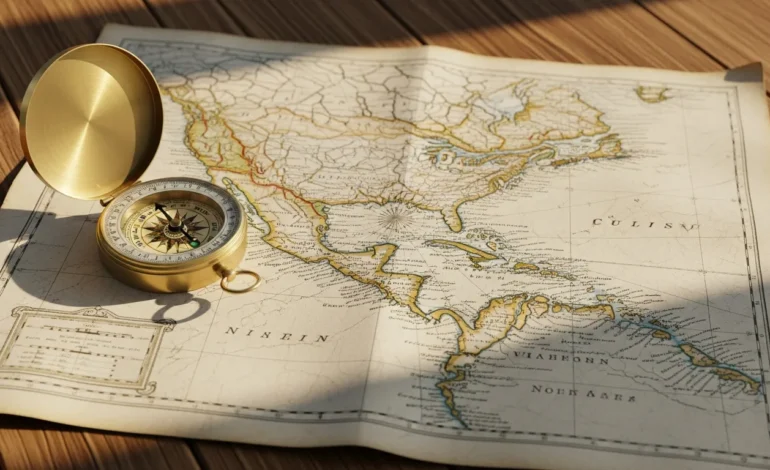
Early Spanish charts referred to the area as the “Senus Mexicanus” or the “Golfo de Nueva España.” However, the specific association with the city of Tenochtitlan—renamed Mexico City—proved more enduring. By the mid-16th century, the term “Golfo de México” began appearing consistently on European maps, cementing the identity of the basin in the minds of global navigators and scholars.
The Role of Early Cartography and Global Recognition
The naming of geographic features in the 1500s and 1600s was often a matter of which mapmaker gained the most traction in European courts. Just as the strategic, economic, and political reasons behind ancient fortifications shaped continental identities, the maps produced by individuals like Diego Ribero and Gerardus Mercator defined the New World’s maritime boundaries. These cartographers relied on Spanish naval records, which consistently used the Mexican designation.
Even as the French and British attempted to establish their own nomenclature for parts of the Gulf—such as the “Bay of Mexico” or regional names for the Mississippi Sound—the Spanish influence remained dominant. Because Spain controlled the majority of the coastline for centuries, their administrative names became the international standard. By the time the United States acquired Louisiana and Florida, the name “Gulf of Mexico” was too deeply embedded in international law and commerce to be changed.
Geographical Identity in the Modern Era
Today, the Gulf of Mexico is often referred to as America’s “Third Coast,” a testament to its economic and cultural importance. While the name remains tied to Mexico, the basin is a shared ecological system managed by three nations: the United States, Mexico, and Cuba. In 2026, this shared identity is vital for addressing rising sea levels and protecting the diverse marine life that migrates across these invisible borders.
- The Gulf covers approximately 600,000 square miles, making it the ninth-largest body of water in the world.
- It is a mediterranean-style sea, meaning it is almost completely surrounded by land, which influences its unique current systems.
- The Loop Current, a major feature of the Gulf, plays a critical role in the intensification of hurricanes and the regulation of North American climates.
- The name serves as a reminder of the pre-colonial history of the Mexica people, even in areas now governed by the U.S.
As we navigate the complexities of the 21st century, the Gulf of Mexico stands as a symbol of interconnectedness. Whether through trade, energy production, or tourism, the name continues to reflect a history that is much larger than any single modern border. It reminds us that our geography is a living record of the people who first charted these waters and the empires that sought to claim them.
Frequently Asked Questions
Was the Gulf of Mexico ever called something else?
Yes, early Spanish explorers initially referred to it as the “Golfo de Nueva España” (Gulf of New Spain). Some French maps in the 17th century also labeled portions of it as the “Sea of the West,” but these names failed to gain the international recognition that the Mexican designation achieved through Spanish maritime dominance and consistent cartographic use over several centuries.
Why didn’t the United States change the name after the Louisiana Purchase?
By the time the U.S. became a major player in the region in 1803, the name “Gulf of Mexico” was already the established standard in international shipping, trade, and diplomacy. Changing the name would have caused significant confusion in maritime law and navigation. Furthermore, the U.S. respected existing geographic nomenclature to maintain consistency in global records and historical documentation.
What does the word ‘Mexico’ actually mean?
The word “Mexico” is derived from the Nahuatl language of the Mexica people. While several interpretations exist, the most widely accepted meaning is “in the navel of the moon” (metztli for moon, xictli for navel). This referred to the location of the Mexica capital, Tenochtitlan, in the center of the Lake of the Moon (Lake Texcoco), which the Spanish later adopted for the entire region and its adjacent sea.
Who was the first European to explore the Gulf of Mexico?
Amerigo Vespucci is often credited with being among the first Europeans to sail into the Gulf in 1497, though his accounts are debated. The first definitive exploration and mapping of the entire Gulf coastline were conducted by Alonso Álvarez de Pineda in 1519. His expedition proved that the Gulf was a semi-enclosed basin rather than a passage to the Pacific, leading to its formal naming in subsequent Spanish records.
Is the Gulf of Mexico considered a sea or an ocean?
Technically, the Gulf of Mexico is classified as a marginal sea of the Atlantic Ocean. It is often called a “mediterranean sea” (lowercase) because it is largely enclosed by land, specifically the coasts of the United States, Mexico, and Cuba. It connects to the Atlantic via the Florida Straits and to the Caribbean Sea via the Yucatan Channel, maintaining its own unique ecological and thermal characteristics.