Understanding the Strategic Motivations Behind the Pearl Harbor Attack
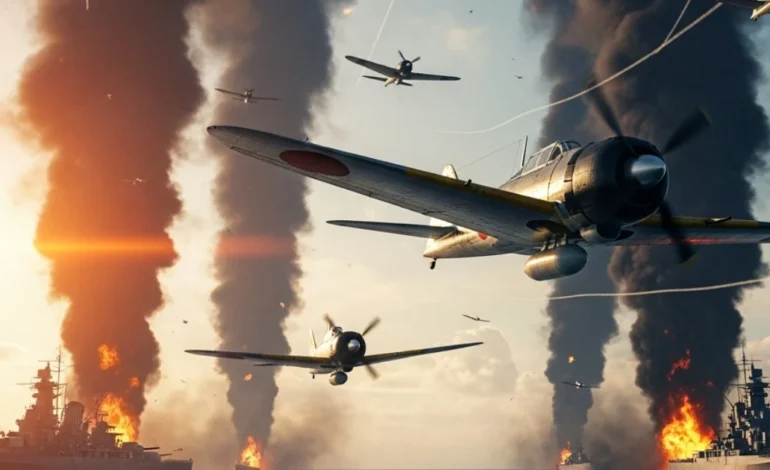
The attack on Pearl Harbor on December 7, 1941, remains one of the most pivotal moments in American history, marking the definitive end of U.S. isolationism and the beginning of its role as a global superpower. As we observe the National Travel Surge during Memorial Day 2026, many Americans utilize this time of reflection to visit national monuments and historical sites, seeking a deeper understanding of the events that necessitated such profound national sacrifice. The question of why Japan chose to strike a neutral United States is complex, involving a volatile mix of economic desperation, imperial ambition, and a fundamental miscalculation of American resolve.
By the late 1930s, Japan was deeply entrenched in a brutal war of expansion in China. To sustain its military machine, Japan relied heavily on imported resources, particularly oil, scrap metal, and rubber from the United States. However, as Japanese atrocities in China came to light and their expansionist goals threatened Western colonial interests in Southeast Asia, the U.S. government began imposing increasingly stringent economic sanctions. These measures were intended to curb Japanese aggression without direct military intervention. Instead, they backed the Japanese leadership into a corner where they felt forced to choose between a humiliating withdrawal from China or a high-stakes gamble to secure resources by force. This guide explores the multifaceted reasons why the Japanese Empire ultimately decided that a preemptive strike on the U.S. Pacific Fleet was their only viable path forward.
Frequently Asked Questions
What were the primary economic reasons for Japan’s decision to attack?
The primary economic driver was Japan’s desperate need for natural resources, specifically oil. By 1941, Japan was importing roughly 80% of its oil from the United States. When the U.S. government, under President Franklin D. Roosevelt, froze Japanese assets and imposed a total oil embargo in July 1941, it effectively placed a countdown on the Japanese military’s operational capacity. Without oil, the Imperial Japanese Navy (IJN) would be paralyzed within months. The Japanese leadership viewed this not merely as a diplomatic maneuver, but as an existential threat. They concluded that they must seize the resource-rich territories of the Dutch East Indies (modern-day Indonesia) and British Malaya to achieve economic self-sufficiency. However, they believed that any move toward these territories would inevitably trigger a military response from the United States, which held the Philippines at the time. Therefore, the attack on Pearl Harbor was designed to neutralize the U.S. Pacific Fleet, providing Japan with a window of opportunity to secure these vital resources in Southeast Asia without American interference.
How did the U.S. oil embargo influence the timeline of the attack?
The U.S. oil embargo acted as a catalyst that accelerated Japan’s transition from diplomatic negotiation to military action. Following the embargo in the summer of 1941, Japanese planners calculated that their oil reserves would last approximately two years for civilian use, but significantly less under the strain of full-scale naval warfare. This created a “use it or lose it” mentality among the military elite. Admiral Isoroku Yamamoto and other leaders realized that if they were to fight the United States, they had to do so while they still possessed the fuel to mobilize their fleet. The timeline was further squeezed by seasonal weather patterns; a winter invasion of the southern territories was tactically preferable before the monsoon season. By October 1941, when General Hideki Tojo became Prime Minister, the window for a diplomatic solution was closing rapidly. The embargo essentially forced Japan’s hand, making a military strike seem like a more rational choice than the slow economic strangulation they faced under American sanctions.
Why did Japan target the U.S. Pacific Fleet specifically?
Japan targeted the Pacific Fleet at Pearl Harbor because it was the only force capable of seriously obstructing their planned expansion into the “Southern Resource Area.” The Japanese strategic doctrine was built around the idea of a “decisive battle.” They believed that if they could destroy the American battleships—then considered the backbone of naval power—in a single, crushing blow, the United States would lose the will to fight a long, protracted war in the Pacific. By sinking the fleet at its moorings, Japan hoped to buy at least a year of undisputed control over the Pacific. During this time, they intended to fortify a massive defensive perimeter across the central Pacific islands, making any American counter-offensive so costly in terms of lives and material that the U.S. would eventually sue for a negotiated peace. Essentially, Pearl Harbor was a tactical move intended to facilitate a strategic fait accompli in Southeast Asia.
What role did the Hull Note play in the breakdown of diplomacy?
The Hull Note, delivered by U.S. Secretary of State Cordell Hull on November 26, 1941, is often cited by historians as the final diplomatic straw. The note demanded that Japan withdraw all military forces from China and French Indochina and recognize the Nationalist government of Chiang Kai-shek. From the American perspective, this was a principled stand against illegal aggression. From the Japanese perspective, however, it was viewed as an unacceptable ultimatum that ignored years of Japanese sacrifice and their perceived right to regional hegemony. The Japanese leadership interpreted the Hull Note as proof that the United States was not interested in a compromise that would allow Japan to keep its conquests. Following the receipt of the note, the Japanese government finalized its decision to proceed with the attack, believing that the U.S. was demanding nothing less than Japan’s total surrender as a regional power before a single shot had even been fired.
Did Japan intend to declare war before the attack began?
Technically, Japan did intend to deliver a formal break in diplomatic relations shortly before the attack, but they did not intend to give a traditional “declaration of war” that would forfeit the element of surprise. The plan involved delivering a 14-part message to the U.S. State Department that would conclude negotiations and signal the start of hostilities. Due to various delays in decoding and transcribing the lengthy message at the Japanese Embassy in Washington, D.C., the document was not delivered until after the bombs had already begun falling on Pearl Harbor. This delay had a profound psychological impact on the American public. What Japan hoped would be a “clean” break in relations was instead perceived as a “sneak attack” and a “day of infamy.” This perceived treachery unified a previously divided American public in a way that a formal declaration might not have, ensuring that the U.S. would settle for nothing less than total victory.
Why were the U.S. aircraft carriers not at Pearl Harbor during the attack?
The absence of the U.S. aircraft carriers—the USS Enterprise, USS Lexington, and USS Saratoga—was a stroke of immense fortune for the United States and a critical failure for the Japanese mission. On December 7, the Enterprise was returning from delivering planes to Wake Island, the Lexington was on a similar mission to Midway, and the Saratoga was undergoing repairs on the West Coast. While the Japanese successfully sank or damaged all eight U.S. battleships in “Battleship Row,” they failed to destroy the vessels that would ultimately define the naval warfare of World War II. The aircraft carriers became the core of the remaining U.S. Pacific strength, allowing the Navy to stay offensive and eventually win the Battle of Midway just six months later. Had the carriers been in port, the U.S. would have lacked the means to project power across the Pacific for years, potentially changing the entire trajectory of the war.
What was the “Greater East Asia Co-Prosperity Sphere”?
The “Greater East Asia Co-Prosperity Sphere” was the ideological and political framework Japan used to justify its expansionism. Officially, it was promoted as a pan-Asian alliance that would liberate Asian nations from Western colonial rule (British, French, Dutch, and American) and create a self-sufficient bloc of nations led by Japan. In reality, it was a front for Japanese imperialism, designed to provide the Empire with the labor, markets, and raw materials it lacked. To achieve this vision, Japan felt it had to remove the United States as a regional power. The attack on Pearl Harbor was the opening move in a campaign to dismantle the Western colonial order in Asia and replace it with a Japanese-centric order. However, the brutal reality of Japanese occupation quickly alienated the very populations they claimed to be “liberating,” leading to widespread resistance movements throughout the region.
How did Japanese domestic politics and militarism drive the conflict?
In the years leading up to 1941, Japan’s civilian government had effectively lost control to the military. The Imperial Japanese Army and Navy operated with significant autonomy and often dictated foreign policy through intimidation and political assassinations. This militarism was fueled by a sense of divine mission and the belief that Japan was destined to lead Asia. Internal rivalries between the Army and Navy also played a role; the Army was focused on the war in China and the threat from the Soviet Union, while the Navy advocated for the “Southern Advance” to secure resources. To maintain internal stability and satisfy the demands of the military elite, the government felt compelled to pursue aggressive expansion. By the time General Hideki Tojo, a hardline military man, became Prime Minister in October 1941, the momentum toward war was nearly unstoppable, as any retreat from their expansionist goals was seen as political suicide for the leadership.
Why is the attack considered a strategic failure despite its tactical success?
While the attack on Pearl Harbor was a brilliant tactical execution—achieving total surprise and inflicting massive damage on the U.S. battle line—it is widely considered one of the greatest strategic blunders in history. First, the Japanese failed to destroy the shore installations, including the massive oil tank farms, the submarine base, and the repair shops. Had these been destroyed, the U.S. would have had to retreat to California, as Pearl Harbor would have been unusable as a forward base. Second, as mentioned, they missed the aircraft carriers. Third, and most importantly, the attack instantly ended American isolationism. Before Pearl Harbor, the U.S. was deeply divided over whether to enter the war. The attack galvanized the American people, triggering the full mobilization of the world’s largest industrial economy. Japan’s hope for a short war and a negotiated peace was shattered by an American commitment to the total destruction of the Japanese Empire.
How does the legacy of Pearl Harbor influence U.S.-Japan relations in 2026?
In 2026, the legacy of Pearl Harbor serves as a foundation for one of the world’s most robust and essential bilateral alliances. The transition from bitter enemies to the closest of allies is often cited as a triumph of post-war diplomacy and shared democratic values. Today, the U.S.-Japan Security Treaty is a cornerstone of stability in the Indo-Pacific region. Both nations collaborate closely on maritime security, technological innovation, and economic policy. Memorials at Pearl Harbor, such as the USS Arizona Memorial, are visited by both Americans and Japanese—including high-ranking officials—as symbols of reconciliation and a shared commitment to peace. In the current geopolitical landscape, the lessons of 1941 regarding economic interdependence, the dangers of unchecked militarism, and the importance of clear diplomatic communication remain highly relevant as both nations navigate modern challenges in global security.