Why Did the US Join WW1?
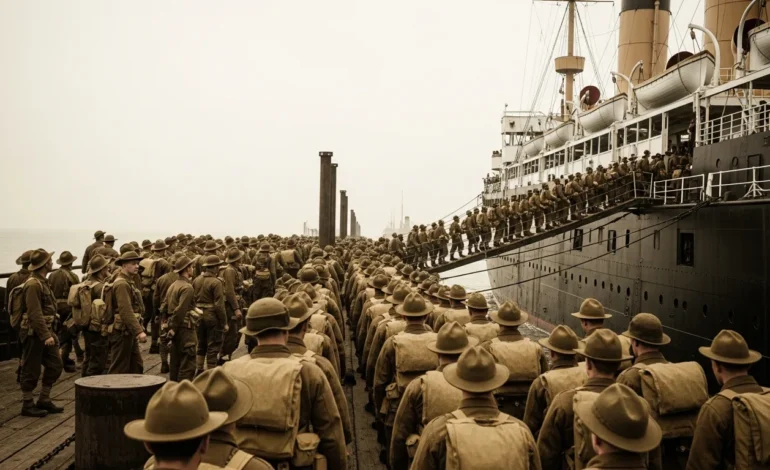
The United States joined World War I on April 6, 1917, primarily due to Germany’s resumption of unrestricted submarine warfare and the exposure of the Zimmermann Telegram. After maintaining a policy of strict neutrality for nearly three years, President Woodrow Wilson determined that German provocations directly threatened American national security and the stability of international commerce. This shift from isolationism to global intervention established a precedent for executive power that would later be seen when FDR served four terms as president during another global crisis.
The Diplomatic and Legislative Timeline of Entry
The transition from neutrality to combat involved a specific sequence of diplomatic ruptures and legislative actions. On February 1, 1917, Germany officially resumed unrestricted submarine warfare, declaring that any ship—including neutral American vessels—entering the war zone around Britain would be sunk without warning. In response, the U.S. severed all diplomatic ties with the German Empire on February 3, 1917. The 1917 pivot toward European alliances mirrors modern shifts, such as how the UK’s summer election signals a geopolitical pivot for Western relations in 2026.
Following the sinking of several American merchant ships in March 1917, President Wilson called for a special session of Congress. On April 2, he delivered his war message, famously stating that “the world must be made safe for democracy.” The Senate passed the war resolution on April 4 with an 82-6 vote, followed by the House of Representatives on April 6 with a 373-50 vote. This formal declaration officially ended American non-interventionism and initiated a massive military mobilization.
Economic Mobilization and the War Revenue Act
Joining the war required an immediate and total overhaul of the American economy to fund the expeditionary forces. The War Revenue Act of 1917 was passed shortly after the declaration, significantly increasing federal income tax rates to generate necessary capital. For example, the top tax rate for high earners jumped from 15% to 67% by 1918. Additionally, the government launched the Liberty Loan program, a series of war bonds that raised over $17 billion from the American public to finance military operations and Allied loans.
- Liberty Bonds: Citizens purchased bonds to provide immediate cash flow for the Department of War.
- War Industries Board: Established in July 1917 to coordinate the purchase of war supplies and encourage mass-production techniques.
- Food Administration: Led by Herbert Hoover, this agency managed the rationing and distribution of food to ensure soldiers and Allies were fed.
Exceptions and What Was Not Allowed
While the Selective Service Act of 1917 mandated the registration of all men aged 21 to 30 (later expanded to 18 to 45), there were strict regulations regarding who could avoid combat. The law did not allow for general “conscientious objection” based on personal or political beliefs. Instead, exemptions were narrowly restricted to members of well-recognized religious sects, such as the Quakers or Mennonites, whose existing creeds forbade participation in war. Even then, these individuals were often required to serve in non-combatant roles, such as the medical corps.
Furthermore, the Espionage Act of 1917 and the Sedition Act of 1918 made it illegal to interfere with military operations or to speak “disloyally” about the U.S. government or the war effort. These laws effectively prohibited anti-war protests and led to the imprisonment of several high-profile activists. Just as the 1917 entry was triggered by a surprise provocation, the later attack on Pearl Harbor would similarly force the U.S. into World War II, leading to even more stringent national security measures.
Frequently Asked Questions
What was the Zimmermann Telegram?
The Zimmermann Telegram was a secret diplomatic communication issued from the German Foreign Office in January 1917. It proposed a military alliance between Germany and Mexico if the United States entered World War I against Germany. In exchange for Mexico’s support, Germany promised to help Mexico recover lost territories in Texas, New Mexico, and Arizona. British intelligence intercepted and decoded the message, and its publication in American newspapers on March 1, 1917, caused massive public outrage, making war with Germany nearly inevitable.
How did the sinking of the Lusitania affect the US entry?
The sinking of the British ocean liner RMS Lusitania by a German U-boat on May 7, 1915, resulted in the deaths of 1,198 people, including 128 Americans. While this event occurred nearly two years before the U.S. officially joined the war, it served as a critical turning point in public opinion. It shifted the American perception of Germany from a distant belligerent to a direct threat to neutral lives. The tragedy forced Germany to temporarily suspend unrestricted submarine warfare, but its resumption in 1917 was seen as a direct betrayal of previous diplomatic pledges.
What were the economic reasons for the US joining WW1?
By 1917, American banks and businesses had lent more than $2 billion to the Allied powers (primarily Britain and France) to fund their war efforts. If the Allies had lost the war, these massive debts would likely never have been repaid, potentially causing a collapse of the American financial system. Consequently, the U.S. had a significant vested interest in an Allied victory. Entering the war ensured that the American economy remained stable and that the industrial boom triggered by war production would continue under government-backed contracts.
Did the US join the League of Nations after the war?
Despite President Woodrow Wilson being the primary architect of the League of Nations, the United States never officially joined the organization. After the war ended in 1918, the U.S. Senate, led by Henry Cabot Lodge, refused to ratify the Treaty of Versailles. Senators feared that joining the League would surrender American sovereignty and force the U.S. into future European conflicts without Congressional approval. This return to isolationism defined American foreign policy throughout the 1920s and 1930s until the outbreak of World War II.