Strait of Hormuz Closes as Iranian Drone Strike Hits Kuwait International Airport
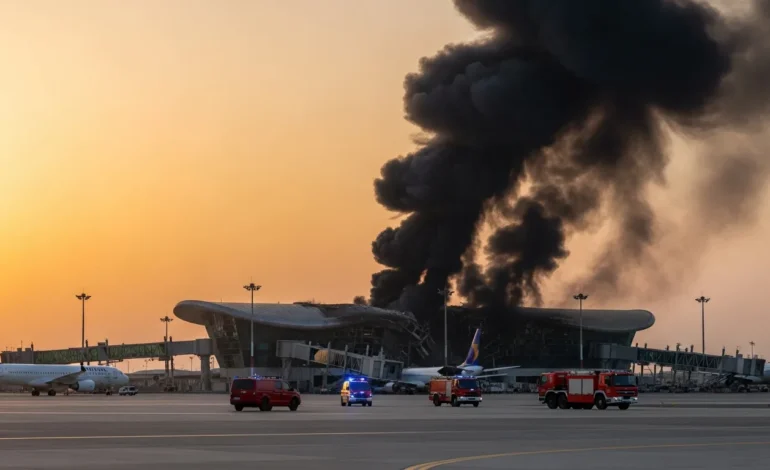
The last time the Persian Gulf faced a systemic threat to its commercial transit routes was during the protracted ‘Tanker War’ of the 1980s, an era of volatility that has seemingly returned with a direct strike on a major civilian hub. On Wednesday, June 3, 2026, an Iranian drone strike hit the T1 building at Kuwait International Airport, killing one person and injuring more than 60 passengers and staff.
Retaliatory Strikes and Military Escalation
U.S. Central Command confirmed retaliatory strikes against an Iranian military ground control station on Qeshm Island following the airport attack. These exchanges were preceded by a U.S. military operation that disabled an Iranian oil tanker with a Hellfire missile, a move that Tehran claims necessitated their current kinetic response.
The conflict expanded further as the Islamic Revolutionary Guard Corps (IRGC) targeted the U.S. Fifth Fleet headquarters in Bahrain. During the exchange, U.S. forces also identified and targeted an Iranian vessel known as the Panaya to neutralize further maritime threats.
Economic Impact and Maritime Blockade
The intensification of hostilities has effectively closed the Strait of Hormuz to maritime traffic, creating a bottleneck in one of the world’s most critical oil chokepoints. Global oil prices rose by more than 1% immediately following the reports of severe structural damage to Kuwait’s main terminal.
- One fatality and 60 injuries reported at Kuwait International Airport Terminal 1.
- Strait of Hormuz remains closed to all commercial and maritime traffic.
- U.S. Central Command destroyed an Iranian ground control station on Qeshm Island.
- Global energy markets report immediate price spikes following the airport strike.
Diplomatic Standoff and Regional Responsibility
Iran’s Foreign Ministry alleged that Kuwait and Bahrain bear direct responsibility for the escalation due to their continued support of U.S. military operations. Despite the stall in formal communication, President Donald Trump stated that negotiations are continuing through secondary channels.
The deliberate targeting of Kuwaiti civilian infrastructure marks a departure from traditional proxy engagements, suggesting Tehran is testing the resolve of the Gulf Cooperation Council. This strategy appears designed to pressure regional allies into reconsidering the logistical support provided to American forces in the Middle East.
Related Coverage
Frequently Asked Questions
What specific damage did Kuwait International Airport sustain?
Kuwait’s General Civil Aviation Authority reported severe structural damage to the T1 building, which serves as the airport’s main terminal for international flights.
Which Iranian military assets were neutralized by U.S. forces?
U.S. Central Command confirmed the destruction of a ground control station on Qeshm Island and the targeting of the Iranian vessel Panaya during the exchange.
How has the strike affected regional oil transit?
The conflict has resulted in the total closure of the Strait of Hormuz, halting the passage of oil tankers and causing an immediate rise in global crude prices.
What was the reported trigger for this specific round of strikes?
The current escalation was triggered after the U.S. military used a Hellfire missile to disable an Iranian oil tanker, leading to retaliatory drone and missile launches from the IRGC.