What Does FIP Mean in Plumbing?
Understanding FIP Thread Specifications
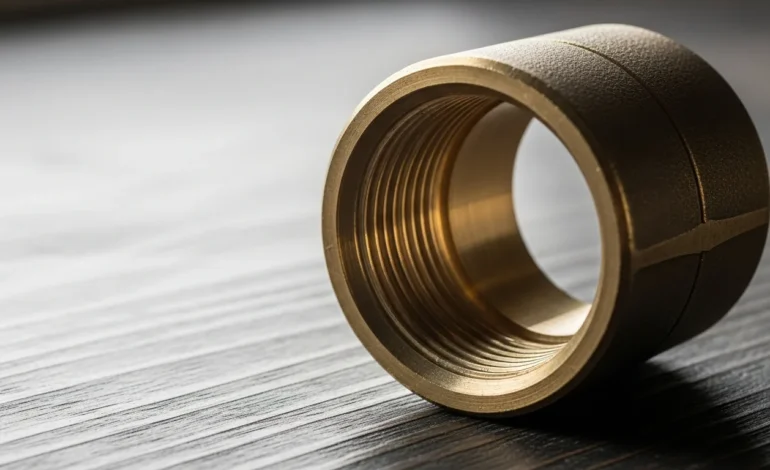
FIP stands for Female Iron Pipe. It refers to a specific type of internal threading used to join pipes and fittings in a pressurized system. Despite the name, FIP fittings are not exclusively made of iron; in 2026, they are commonly manufactured from lead-free brass, stainless steel, and various high-density polymers to comply with the Safe Drinking Water Act. FIP threads are tapered, meaning the diameter of the threads narrows slightly as they go deeper into the fitting, which helps create a watertight seal when mated with a corresponding male thread.
In technical terms, FIP is functionally identical to NPT (National Pipe Tapered) female threads. When sourcing high-precision components, professionals often consult a 2026 industry guide to ensure thread tolerances meet exact specifications for commercial or residential applications. Understanding this terminology is vital for ensuring compatibility between valves, faucets, and supply lines.
How to Identify and Measure FIP Fittings
Identifying an FIP fitting requires looking at the interior of the connection point. If the threads are located on the inside of the pipe or valve, it is a female connection. Because FIP threads are tapered, they rely on a mechanical interference fit combined with a sealant to prevent leaks. You can distinguish FIP from straight threads (like those on a garden hose) by the fact that FIP threads become visibly tighter as you screw a male component into them.
Measuring FIP fittings can be counterintuitive for DIYers. A 1/2-inch FIP fitting does not have an internal diameter of exactly 0.5 inches; rather, the measurement refers to the nominal pipe size. To accurately identify a fitting in the field, use a caliper to measure the interior diameter and compare it to a standard NPT/FIP chart. Fluctuations in material costs, often influenced by the same factors that cause gas prices to rise in June 2026, can impact the retail price of brass FIP fittings, which currently range from $4.00 to $12.00 depending on the alloy quality.
Step-by-Step Installation Procedure
- Clean the Threads: Use a wire brush or a lint-free cloth to remove any debris, factory oils, or old sealant from the internal FIP threads.
- Apply Sealant: Wrap the corresponding male (MIP) threads with 3 to 4 wraps of PTFE (Teflon) tape in a clockwise direction. For high-pressure 2026 systems, applying a thin layer of pipe joint compound (pipe dope) over the tape is recommended.
- Hand Tighten: Thread the male fitting into the FIP opening by hand until it is finger-tight to avoid cross-threading.
- Final Torque: Use two wrenches—one to hold the FIP fitting steady and one to turn the male pipe. Tighten an additional 1 to 2 full turns past finger-tight; do not bottom out the threads.
Exceptions and What is NOT Allowed
It is critical to recognize that FIP threads are not compatible with all plumbing connections. You must never attempt to force an FIP fitting onto a flare, compression, or straight-thread (NPSM) connection without a specific adapter. Doing so will strip the threads and cause immediate failure under pressure. Additionally, 2026 plumbing codes strictly prohibit the use of FIP connections in high-vibration environments without secondary support, as the tapered seal can loosen over time.
What is NOT allowed in modern installations includes the use of FIP fittings for gas lines if the fitting is not specifically rated for fuel. Furthermore, you cannot use standard FIP fittings in systems exceeding their rated PSI (typically 150-300 PSI for standard brass). Over-tightening plastic FIP fittings is a common error that leads to stress cracking; always follow the manufacturer’s specific torque limits for PVC or CPVC components to avoid property damage.
Frequently Asked Questions
Is FIP the same as FPT?
Yes, FIP (Female Iron Pipe) and FPT (Female Pipe Thread) are interchangeable terms used to describe the same internal tapered thread standard. Both refer to the NPT (National Pipe Tapered) specification. While the terminology varies by manufacturer or region, the physical dimensions and thread counts per inch are identical, ensuring that an FPT male fitting will always fit into an FIP female opening of the same nominal size.
Can I connect a PVC FIP fitting to a metal pipe?
Yes, you can connect a PVC FIP fitting to a metal male pipe, but it requires caution. Because metal is harder than plastic, it is very easy to over-tighten the connection and crack the PVC female fitting. In 2026, best practices suggest using a specialized transition fitting or ensuring you use a high-quality non-hardening pipe dope specifically rated for plastics to prevent chemical degradation of the PVC over time.
Do FIP fittings require a gasket or O-ring?
No, standard FIP fittings do not use gaskets or O-rings to create a seal. Instead, they rely on the tapered design of the threads to create a metal-to-metal (or plastic-to-plastic) wedge. This is why the use of thread sealant, such as PTFE tape or pipe dope, is mandatory. The sealant fills the microscopic gaps between the thread crests and roots to ensure the connection remains airtight and watertight under pressure.
What is the difference between FIP and MIP?
The difference lies entirely in the gender of the threads. FIP (Female Iron Pipe) has internal threads, while MIP (Male Iron Pipe) has external threads. They are designed to screw into one another. In any standard threaded plumbing joint, you will have one FIP component and one MIP component. They share the same tapered thread pitch and diameter standards, making them the universal pairing for threaded pipe systems in the United States.