Brinkmanship in Burgenstock: Trump Threatens Renewed Strikes as Iran Peace Talks Commute

The delicate architecture of Middle Eastern diplomacy often rests on the narrowest of corridors, a reality underscored by the sudden intersection of high-level peace talks and renewed military threats. On Sunday, June 21, 2026, President Donald Trump warned he would “hit Iran very hard again” if Tehran does not immediately halt support for its “highly paid PROXIES” in Lebanon.
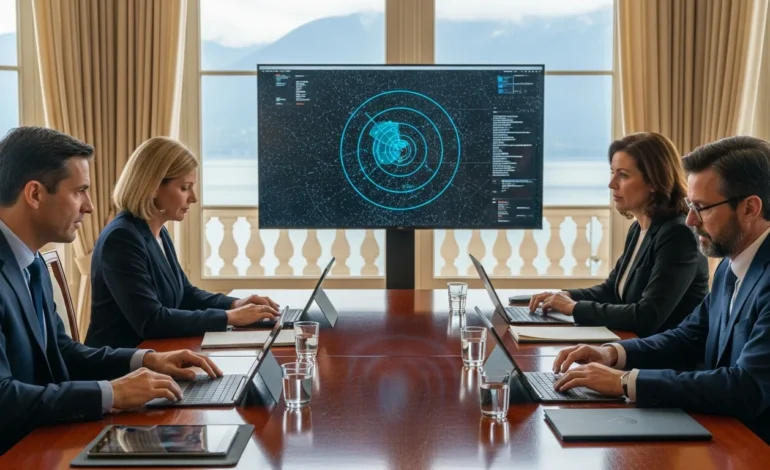
The ultimatum, issued via Truth Social, arrived as Vice President J.D. Vance and Secretary of State Marco Rubio attempted to solidify a fragile preliminary peace deal at the Burgenstock resort in Switzerland. This development follows a U.S. military strike conducted last week, which the President cited as a baseline for future kinetic responses should negotiations falter.
A Maritime Standoff in the Strait of Hormuz
The diplomatic friction intensified following Tehran’s decision to close the Strait of Hormuz earlier on Sunday in response to ongoing regional strikes. President Trump countered the blockade by suggesting the U.S. could assume the role of a “Guardian Angel” for the waterway, potentially taking over the strait to collect 20% of the oil value as tolls.
Iran’s chief negotiator, Mohammad Bagher Ghalibaf, responded to the rhetoric by advising Washington to “be careful” with its public statements. Ghalibaf emphasized that Iran’s armed forces are “ready to respond” and asserted that the Islamic Republic does not take American threats into account during the current state of “desperation.”
Mediated Stability Under Threat
Currently mediated by Pakistan and Qatar, the Burgenstock summit represents the first high-level direct engagement between the two nations outside of Islamabad in recent history. The 14-point memorandum of understanding signed on June 17 is now at risk of derailment as Hezbollah continues its operations against Israel in the West Asia conflict.
While Vice President Vance reported “great progress” in technical discussions regarding nuclear enrichment and sanctions, the President’s rhetoric introduces a volatile variable into the negotiation room. The administration appears to be balancing a “maximum pressure” tactic with the potential for a landmark accord that could fundamentally transform the regional security framework.
- Tehran’s closure of the Strait of Hormuz has already triggered shifts in global oil logistics and maritime insurance premiums.
- The Burgenstock negotiations face immediate suspension if kinetic actions resume in Lebanon or the Persian Gulf.
- U.S. naval assets in the region have been placed on heightened surveillance status following last week’s strikes.
The shift toward “maritime tolling” as a rhetorical threat suggests a departure from traditional freedom-of-navigation operations toward a model of sovereign economic extraction in international waters. This tactical evolution could redefine the cost of regional instability for energy-dependent nations if the U.S. pursues a physical takeover of the world’s most critical oil artery.
Frequently Asked Questions
What is the Islamabad Memorandum of Understanding?
It is a 14-point preliminary agreement signed on June 17, 2026, aimed at ending the U.S.-Israel-Iran conflict and establishing a framework for long-term regional stability.
Why did Iran close the Strait of Hormuz?
Tehran cited continued Israeli strikes in Lebanon and a perceived breach of the ceasefire agreement by the U.S. as the primary reasons for the maritime blockade.
What role are Pakistan and Qatar playing in the negotiations?
Both nations are serving as lead mediators, facilitating the technical and high-level talks currently taking place at the Burgenstock Resort in Switzerland.