Why Did France Give the Statue of Liberty to the United States?
The Core Motivation Behind the Gift of Liberty
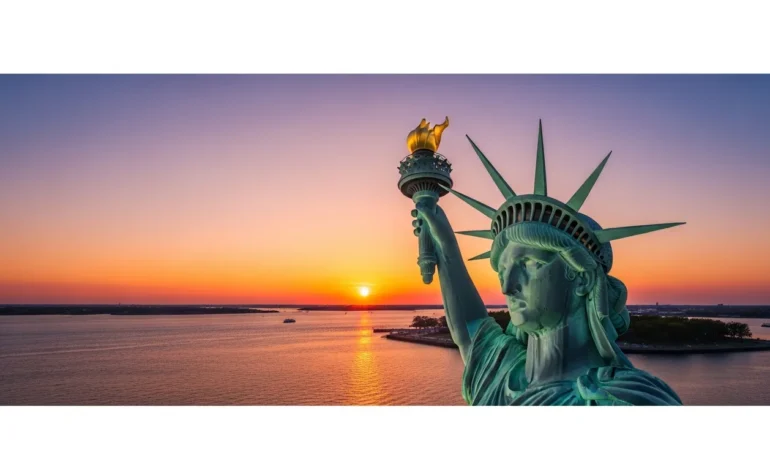
The Statue of Liberty, officially titled “Liberty Enlightening the World,” was gifted by the people of France to the United States to commemorate the centennial of the Declaration of Independence and the enduring friendship between the two nations. While often viewed as a simple diplomatic gesture, the project was primarily driven by French jurist and politician Édouard de Laboulaye. In 1865, Laboulaye proposed the monument to celebrate the Union’s victory in the American Civil War and the subsequent abolition of slavery, which he believed reaffirmed the shared democratic ideals of both republics. As millions of Americans prepare for the 2026 Semiquincentennial celebrations, understanding this gift’s origin highlights the foundational link between French and American concepts of freedom.
The Political Strategy of Édouard de Laboulaye
Édouard de Laboulaye was a prominent abolitionist and a scholar of the American constitution who used the statue as a political tool to inspire his own countrymen. During the mid-19th century, France was under the authoritarian rule of Napoleon III, and Laboulaye hoped that by celebrating American liberty, he could point to a successful model of a stable republic for France to emulate. He organized the Franco-American Union to raise funds, ensuring the project was a grassroots effort by French citizens rather than a direct government grant. This distinction is critical; the statue represented the shared aspirations of the people, independent of the shifting political regimes in Paris at the time.
Commemorating the Centennial and the Abolition of Slavery
The timing of the gift was intended to coincide with the 100th anniversary of the signing of the Declaration of Independence in 1876. Although construction delays meant the statue was not dedicated until 1886, the symbolism remained rooted in the mid-century triumph of the American democratic system. A key, often overlooked detail is the presence of broken shackles and chains at Lady Liberty’s feet, which were included by sculptor Frédéric Auguste Bartholdi to specifically honor the end of the Civil War and the emancipation of enslaved people. This historical context aligns with other major milestones in US history, such as the reasons why the US joined WW1 to protect democratic interests abroad.
The Joint Funding and Construction Process
The creation of the monument was a bilateral procedural effort with a strict division of financial responsibility. France was responsible for the statue itself—including the copper skin and the internal iron framework designed by Gustave Eiffel—while the United States was tasked with building the pedestal. Fundraising in the US stalled significantly until Joseph Pulitzer used his newspaper, The World, to launch a massive crowdfunding campaign that gathered small donations from over 120,000 contributors. This collaborative effort solidified the statue as a symbol of the common man’s commitment to liberty, much like the American national flower serves as a legally protected symbol of the country’s heritage.
Exceptions and What Was NOT Part of the Gift
It is a common misconception that the Statue of Liberty was a fully funded, turnkey gift from the French government. In reality, several limitations and exclusions applied to the 1884 transfer of the monument:
- No Government Funding: The French government did not provide official state funds for the construction; it was funded entirely through donations, lotteries, and benefit concerts by the French public.
- Pedestal Exclusion: The gift did not include the granite pedestal or the land on Bedloe’s Island (now Liberty Island); these were strictly American responsibilities.
- Maintenance Costs: France provided no endowment for the ongoing upkeep of the statue; all maintenance and restoration costs since 1886 have been the responsibility of the US government and private American foundations.
- Immediate Delivery: The statue was not delivered in 1876 as originally planned; the arm and torch were displayed at the Centennial Exposition in Philadelphia, but the full assembly did not arrive in New York Harbor until June 1885.
Frequently Asked Questions
Who was the primary architect of the Statue of Liberty’s internal structure?
While Frédéric Auguste Bartholdi designed the exterior, the internal structural engineering was handled by Alexandre-Gustave Eiffel. Eiffel created a flexible iron pylon and a skeletal framework that allowed the statue’s copper skin to move independently in response to wind and temperature changes. This innovative design was essential for the statue’s survival in the harsh environment of New York Harbor and predated his work on the famous Eiffel Tower in Paris.
How much did the Statue of Liberty cost to build in today’s currency?
The total cost of the statue and its pedestal was approximately $500,000 in 1880s currency. When adjusted for 2026 inflation rates, this amount exceeds $15 million. The French raised roughly $250,000 for the statue, while the American public raised a similar amount for the pedestal. These funds were gathered almost entirely through small-scale private donations rather than corporate sponsorships or government grants.
What is the significance of the date inscribed on the statue’s tablet?
The tablet held in Lady Liberty’s left hand is inscribed with “JULY IV MDCCLXXVI” (July 4, 1776). This date commemorates the adoption of the Declaration of Independence, marking the birth of the American republic. The tablet is shaped like a “keystone,” symbolizing the law as the foundational support of liberty. This reinforces the message that true freedom is maintained through a system of established laws and democratic governance.
Why is the Statue of Liberty green if it is made of copper?
The statue’s green color, known as a patina, is the result of a natural chemical process called oxidation. When the statue was first dedicated in 1886, it was the dull brown color of a penny. Over the course of roughly 30 years, exposure to rain, wind, and saltwater caused the copper to react with the atmosphere, creating a thin layer of copper carbonate that protects the underlying metal from further corrosion.