What Are the USDA Summer 2026 Food Safety Guidelines?
The 2026 USDA Danger Zone and Time Limits
The USDA defines the ‘Danger Zone’ as the temperature range between 40°F and 140°F, where bacteria can double in number in as little as 20 minutes. For the summer of 2026, the USDA has issued a heightened alert due to record-breaking temperatures affecting outdoor gatherings. While the standard rule is to never leave food out for more than two hours, this window shrinks to exactly one hour when the ambient temperature is above 90°F. With the national travel surge bringing millions of Americans to outdoor parks and campsites this season, strict adherence to these cooling timelines is the primary defense against foodborne illness.
Safe Internal Temperature Requirements for Grilling
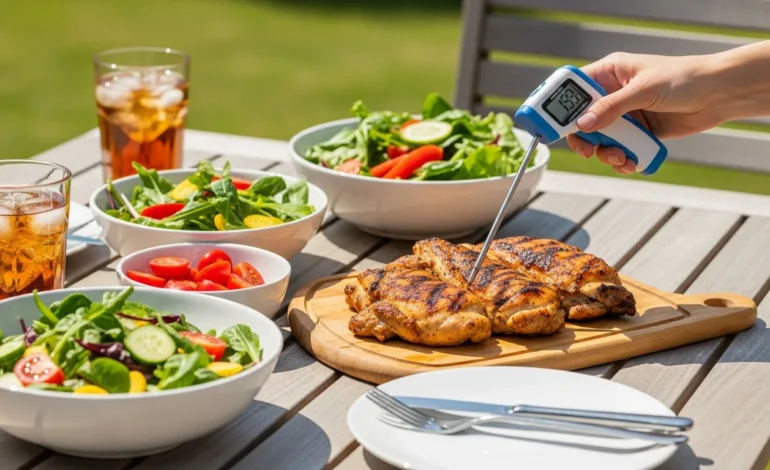
Achieving the correct internal temperature is the only scientifically validated way to ensure that pathogens like E. coli and Salmonella are destroyed. In 2026, the USDA continues to mandate the use of a digital food thermometer rather than relying on visual cues like meat color or juice clarity. All poultry, including ground chicken and turkey, must reach a minimum internal temperature of 165°F. Ground meats such as beef, pork, and lamb require 160°F, while whole cuts of beef, veal, and lamb should be cooked to 145°F followed by a mandatory three-minute rest period to allow the temperature to stabilize and finish destroying bacteria.
Managing Food Safety with Summer EBT (SUN Bucks)
The 2026 summer season sees a significant expansion of the SUN Bucks program, providing families with additional resources to purchase perishable goods. When utilizing these benefits, consumers must prioritize the ‘cold chain’ from the grocery store to the home refrigerator. It is recommended to use insulated bags and ice packs for any transit time exceeding 30 minutes, especially in high-heat regions. For those wondering how to apply for Summer EBT 2026 food assistance, ensuring you have the proper storage infrastructure is just as critical as securing the benefits themselves to prevent waste and illness.
Exceptions and What is NOT Allowed
The USDA 2026 guidelines explicitly prohibit several common but dangerous kitchen practices that increase the risk of cross-contamination. There are no exceptions to these safety protocols, regardless of the food’s organic status or source.
- No Washing Raw Poultry: You are not allowed to wash or rinse raw chicken or turkey; this practice splashes bacteria onto kitchen surfaces, tools, and other foods.
- No Partial Grilling: You cannot partially grill meat or poultry to finish later; heat must be applied continuously until the safe internal temperature is reached to prevent bacterial survival.
- No Reusing Marinades: Marinades used on raw meat cannot be reused as a sauce on cooked food unless they are first brought to a rolling boil for at least one minute.
- No Room Temperature Thawing: Thawing frozen meat on the counter is strictly prohibited; use the refrigerator, cold water (changed every 30 minutes), or the microwave.
Frequently Asked Questions
Can I use the same plate for raw and cooked meat if I wipe it down?
No, you cannot reuse a plate that held raw meat for cooked meat unless it has been thoroughly washed with hot, soapy water. Wiping a plate with a cloth or paper towel does not eliminate microscopic pathogens. The USDA recommends using two distinct sets of plates and utensils—one for raw preparation and one for serving—to eliminate the risk of cross-contamination during summer cookouts.
How long can leftovers stay in a cooler with ice?
Leftovers can remain safe in a cooler only if the internal temperature of the cooler is maintained at or below 40°F. You must use a dedicated appliance thermometer inside the cooler to monitor this. If the ice melts and the temperature rises above 40°F for more than two hours (or one hour in 90°F+ heat), the food must be discarded immediately to prevent food poisoning.
Is it safe to cook frozen burgers directly on the grill?
Yes, it is safe to cook frozen meat directly on the grill, but you must account for a longer cooking time—typically 50% longer than thawed meat. You must still use a digital thermometer to verify that the center of the burger reaches 160°F. Because frozen patties cook unevenly, checking multiple spots in the meat is required to ensure no cold, undercooked pockets remain.
What is the 2026 rule for ‘resting’ meat after grilling?
The USDA requires a three-minute rest period for all whole cuts of red meat (steaks, roasts, and chops) after they are removed from the heat source. During this time, the temperature remains constant or continues to rise slightly, which is a critical step in the lethality process for bacteria. This rule does not apply to ground meats or poultry, which are safe to eat immediately upon reaching their target temperatures.