Automation Manager Explained: What They Do, Skills, Salary, and How to Become One
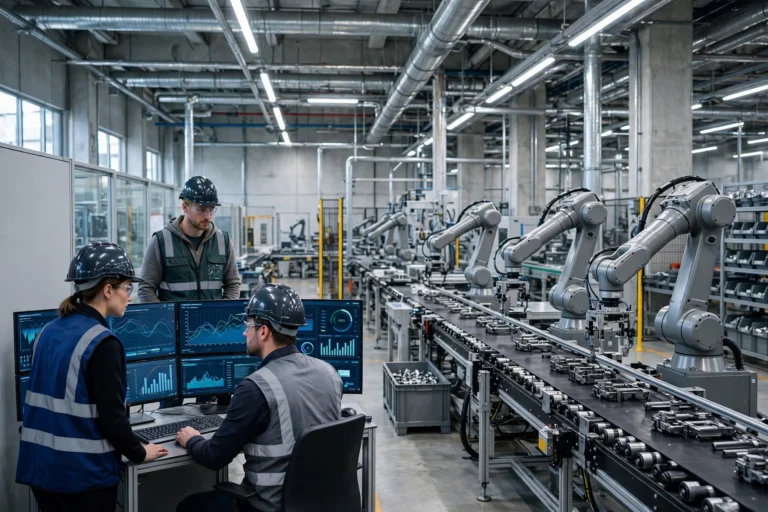
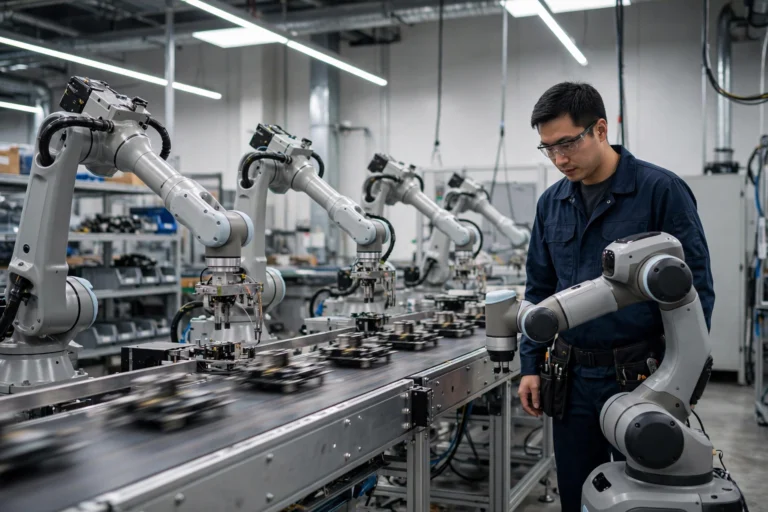
An automation manager is the person accountable for turning repetitive, manual work into systems that run reliably on their own. The title covers several related jobs: in a factory it may mean running control systems and robotics, in IT it may mean owning workflow automation, and in marketing it may mean running campaign automation.
Key takeaway: An automation manager leads the people, projects and platforms that replace repetitive manual work with reliable automated systems. They choose what to automate, run the team that builds it, and prove the result in time saved, fewer errors and lower cost.
What is an automation manager?
An automation manager owns an organisation’s automation roadmap from idea to measurable result. That means finding processes worth automating, designing the solution, leading the engineers and analysts who build it, and keeping it running safely after launch. Job descriptions consistently pair technical leadership with delivery accountability: setting team goals, owning the roadmap, governing reusable solutions, and reporting return on investment.
What does an automation manager do day to day?
Automation managers identify opportunities with operations, production or business teams, define requirements and project scope, and select tools that fit existing systems. They plan budgets and timelines, manage risks and change, and track whether each automation delivers — fewer errors, faster turnaround, less downtime or lower cost.
They also own documentation, testing, monitoring, training and compliance — the work that keeps automation trustworthy after launch.
Automation manager vs automation engineer
An automation engineer builds and maintains automated systems; an automation manager decides which systems to build, in what order, and whether they are worth the cost. Engineers go deeper on one technology; managers go broader across people, budgets and business outcomes.
| Automation manager | Automation engineer | |
|---|---|---|
| Main focus | Strategy, roadmap, team delivery and ROI | Design, build, test and maintain systems |
| Daily work | Prioritisation, stakeholder decisions, budgets | Implementation, troubleshooting, optimisation |
| Success measure | Business outcome across a portfolio | Reliability of specific systems |
Related explainers cover neighbouring roles and tools: how to become an automation engineer, the types of process automation, and IT process automation (ITPA) tools.
Skills and qualifications
Employers typically ask for a bachelor’s degree in engineering, computer science, information technology or a related field, plus several years of hands-on automation experience. Technical knowledge depends on the sector — PLCs, SCADA and robotics in manufacturing; scripting, APIs and workflow platforms in IT; CRM and campaign tools in marketing — but the leadership requirements are consistent: project management, clear communication, analytical problem-solving, and running a team through complex change.
How much does an automation manager earn?
Pay varies widely because the title spans industries, so treat any single figure with caution. VelvetJobs lists an average salary of $107,500 a year for “Manager, Automation” in the United States, with a range of $89,500 to $141,200, and an average base salary of $100,000 for “Automation Manager”. A separate Control Engineering 2026 survey of automation engineering professionals reported an average base salary of about $117,000, with 63% earning $100,000 or more — a broader engineering population, not managers alone.
How to become an automation manager
The usual path starts with a relevant degree, followed by hands-on work as an automation engineer, technician, analyst or specialist. From there, candidates take on larger projects, mentor colleagues and own delivery before moving into management — a journey that commonly takes several years beyond the degree. A practical route is: build depth in one automation area, lead a project end to end, learn budgeting and stakeholder management, then apply for a team-lead or manager role.
Career changers should start with the automation area closest to their current work and document each project’s before-and-after result. For testing roles, see business process testing automation explained.
Risks and limits to watch
Automating a broken process only produces bad results faster, so managers must fix the process before scaling it. Over-automation can remove human judgement from decisions that need it, and poorly governed automation creates security, compliance and maintenance debt. Good managers set approval rules, monitor failure rates, keep a human fallback, and retire automations that no longer earn their keep.
Analysis: is this a good career bet?
Analysis — not a verified fact: the role looks durable because organisations keep adding software and machines, and someone must decide what should run itself. The main risk is vagueness: specialise in one domain while building transferable management skills.
Frequently asked questions
What does an automation manager do?
An automation manager leads the strategy, team and delivery of automation projects. They choose what to automate, oversee the build and rollout, and measure results such as time saved, fewer errors and lower costs.
What qualifications do you need to become an automation manager?
Most employers ask for a bachelor’s degree in engineering, computer science, IT or a related field, plus several years of hands-on automation experience. Project management skills and a record of delivered projects matter as much as formal qualifications.
How much does an automation manager earn?
US figures vary by industry and scope. VelvetJobs lists an average of $107,500 a year for Manager, Automation, with a range of $89,500 to $141,200. Location, seniority and total compensation can move individual pay well outside that band.
What is the difference between an automation manager and an automation engineer?
An automation engineer builds and maintains automated systems, while an automation manager decides which systems to build, leads the team, manages budgets and owns the business outcome. Engineers specialise deeper; managers work broader.
How long does it take to become an automation manager?
It commonly takes several years: a degree plus hands-on automation roles, then project leadership experience before moving into management. The timeline depends on the industry, team size and how quickly a candidate takes on delivery responsibility.
Sources
- ClimbTheLadder — What Does an Automation Manager Do?
- Ensono — Manager, Automation job description
- VelvetJobs — Manager, Automation Salary
- Control Engineering — 2026 Career and Salary Report
- ReadySetHire — Understanding the Automation Manager Role