Cislunar Sovereignty: NASA Validates Orion Systems as Deep Space Competition Intensifies
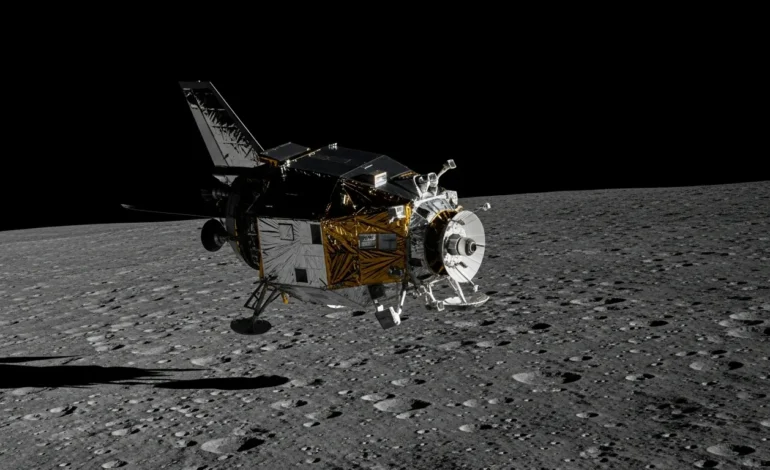
The last time a human-rated spacecraft ventured beyond low Earth orbit, the geopolitical landscape was defined by the binary tensions of the Cold War; that era effectively ended this week as NASA finalized the successful performance review of the Artemis II mission. This 10-day flight test, which launched in April 2026 and concluded its primary data analysis phase by June 18, 2026, marks the first time a crewed vessel has navigated deep space since the Apollo 17 mission in 1972.
Utilizing the Space Launch System (SLS) rocket and the Orion spacecraft, the mission reached a distance of more than 230,000 miles from Earth during its lunar flyby. NASA Administrator Jared Isaacman confirmed that all life-support and navigation systems performed within expected parameters, validating the hardware for the next phase of the ‘Moon to Mars’ architecture.
A New Architecture for Multipolar Space Power
Unlike the isolationist nature of the 20th-century space race, Artemis II represents a calculated consolidation of Western alliances through the inclusion of the first Canadian astronaut, Jeremy Hansen, in deep space. The crew, which also included Commander Reid Wiseman, Pilot Victor Glover, and Mission Specialist Christina Koch, utilized the European Service Module for propulsion, effectively making every mile of the journey a transatlantic endeavor.
This mission serves as a critical counterweight to recent advancements by Beijing, which successfully tested its Long March 10A heavy-lift rocket earlier this year. As China prepares for its own crewed lunar landing by 2030, the success of Artemis II reinforces the technical lead of the U.S.-led Artemis Accords framework in the contest for cislunar resource access.
Strategic Pivot and the ‘Starfleet’ Doctrine
In a significant shift in exploration strategy, NASA officials have indicated that the upcoming Artemis III mission will be revamped into a high-stakes dress rehearsal in Earth orbit rather than an immediate lunar landing. This adjustment aims to prove the integration of Orion with commercial landers and multiple launch vehicles, a logistical feat Isaacman described as the beginning of an integrated “Starfleet” for deep space operations.
Public interest in the mission has reached unprecedented levels, with live feeds from the Orion capsule’s cameras garnering millions of views and serving as a potent tool for digital diplomacy. The successful return trajectory and subsequent splashdown in the Pacific Ocean provide the necessary telemetry to refine heat shield protocols for the eventual return to the lunar South Pole.
Frequently Asked Questions
How does the Artemis II mission differ from the original Apollo flights?
Artemis II focuses on testing sustainable life-support systems and international interoperability rather than a singular landing objective. The mission also utilizes modern digital avionics and a multipolar alliance structure that includes the Canadian Space Agency and the European Space Agency.
What was the strategic purpose of the lunar circumnavigation?
The flyby served as a high-stakes verification of the Orion spacecraft’s ability to protect a human crew from deep-space radiation and maintain life support over an extended duration. It ensures that all manual and automated flight controls are prepared for the logistical complexity of establishing a permanent lunar presence.
Why is the inclusion of a Canadian astronaut geopolitically significant?
The participation of Jeremy Hansen signals a deep integration of North American security and scientific interests, providing Canada with a seat at the table in cislunar governance. This partnership is a key component of the Artemis Accords, which seek to establish norms for peaceful space exploration among allied nations.
What is the next step for NASA after the success of Artemis II?
NASA will now focus on the revamped Artemis III mission, which will serve as a fast-tracked test of orbital docking and refueling capabilities. This mission is designed to ensure that the infrastructure for a sustainable lunar base is technically sound before the first crewed landing of the 21st century.