Waymo Safety Data Challenges Human Driving Records Amid 40,000 Annual Road Deaths
For the thousands of American families who lost loved ones to distracted driving last year, the math behind Waymo’s latest safety audit represents more than just corporate data. It is a stark indictment of human error on the road.
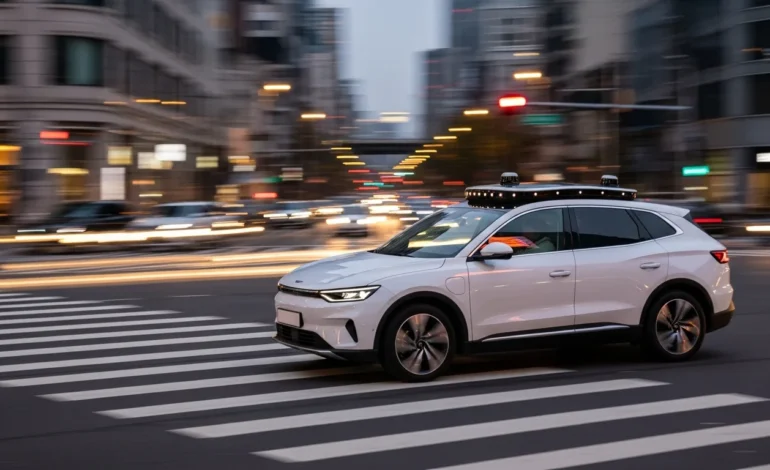
Waymo released a comprehensive safety report on Thursday, June 18, 2026, claiming its autonomous vehicles are 8 to 12 times safer than human drivers. The data is pulled from millions of miles driven in dense urban environments including San Francisco, Los Angeles, and Phoenix.
Aviation Standards for the American Road
The report compares autonomous performance against a grim national reality of approximately 40,000 annual roadway deaths. Safety advocates are now calling for autonomous vehicles to be regulated with the same intensity as commercial aviation, which maintains near-zero annual fatalities.
Current U.S. road statistics are frequently cited by urban planners as a historical crossroads for transportation safety. Fatalities in 2023 were equivalent to a regional airplane crashing every single day for a year, a statistic Waymo claims its technology can virtually eliminate.
- Human errors such as speeding, fatigue, and distraction are absent in autonomous systems.
- Waymo vehicles utilize a 360-degree suite of LiDAR, radar, and cameras to monitor environments.
- The company’s 2026 expansion includes new active service areas in Austin and Miami.
The Debate Over Independent Verification
Despite the high safety marks, critics in Washington argue that the datasets remain too concentrated in specific fair-weather climates. They are demanding independent, third-party verification of Waymo’s internal numbers before supporting widespread federal deployment.
Lawmakers are currently deadlocked on the question of how safe is safe enough for the American public. While the 10-fold safety increase is significant, the transition period involves a complex mix of robotic and human drivers sharing the same unpredictable pavement.
Related Coverage
- Federal Settlement Mandates $15 Million Fine and Massive Safety Overhaul for Norfolk Southern
- Nvidia Market Dominance: AI Chip Giant Eyes $2.6 Trillion Valuation After Record Earnings
Frequently Asked Questions
Does Waymo operate in rain or snow?
While Waymo has expanded to Austin and Miami, the technology is still being optimized for heavy precipitation and wintry conditions that can interfere with sensor accuracy. Most current data comes from regions with relatively stable weather patterns.
How do autonomous vehicles handle emergency vehicles?
The systems are programmed to recognize sirens and flashing lights through audio sensors and 360-degree cameras. They are designed to pull over or yield the right-of-way more consistently than many human drivers.
Who is liable if an autonomous vehicle is involved in a crash?
Liability remains a central point of debate in Congress, with current frameworks often shifting responsibility toward the technology provider rather than the passenger. This legal uncertainty is one of the primary hurdles for nationwide legislative approval.