ICJ Issues Emergency Mandate for Israel to Terminate Rafah Military Operations
A Landmark Ruling in The Hague
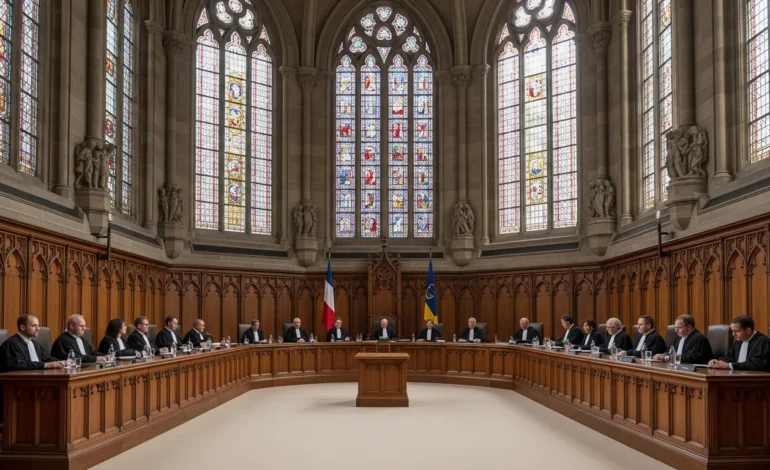
THE HAGUE, Netherlands — In a monumental ruling that carries profound implications for international law and global diplomacy, the United Nations’ highest court has ordered Israel to immediately suspend its military offensive in the southern Gaza city of Rafah. The International Court of Justice (ICJ) delivered its decision on Friday, citing the “disastrous” humanitarian situation and the “immediate risk” to the civilian population as the primary catalysts for the emergency measure.
The court’s president, while reading the order, stated that the current conditions in Rafah—where more than one million displaced Palestinians have sought refuge—are so dire that any further military escalation would result in irreparable harm. The ruling marks a significant escalation in the legal pressure facing the Israeli government as it continues its campaign against Hamas following the October 7 attacks.
The Humanitarian Imperative
The ICJ’s decision is part of a broader case brought by South Africa, which accuses Israel of violating the 1948 Genocide Convention. While the court did not rule on the merits of the genocide allegation itself—a process that could take years—it found that the humanitarian crisis in Rafah reached a threshold requiring immediate intervention.
According to the court’s findings, the following factors contributed to the emergency order:
-
- Mass Displacement: The concentration of over a million people in a confined geographic area with insufficient infrastructure.
- Access to Aid: The ongoing military operations have severely hindered the entry of food, medicine, and fuel through the Rafah crossing.
-
- Public Health Risk: The breakdown of sanitation and healthcare services has created a tinderbox for disease and malnutrition.
Expert analysts noted that the court’s language was uncharacteristically blunt, reflecting a growing consensus among international legal bodies that the civilian toll in Gaza has exceeded the limits of international humanitarian law.
Implications for U.S. Foreign Policy
For the typical American, this ruling is more than a distant legal debate; it represents a critical pivot point for U.S. foreign policy and domestic political discourse. The United States has long been Israel’s most stalwart ally, providing billions of dollars in military aid and diplomatic cover at the UN Security Council.
However, the ICJ mandate places the Biden administration in an increasingly tenuous position. Reports suggest that the administration has already expressed concerns regarding a full-scale assault on Rafah, labeling it a “red line.” With the UN’s top court now formally demanding a halt, the U.S. faces mounting pressure to align its military support with international legal standards.
Furthermore, the ruling is likely to embolden domestic critics of the administration’s policies. Across the United States, university campuses and city streets have become theaters of intense debate over the conflict. This legal development provides a new framework for activists demanding a ceasefire and a reassessment of the U.S.-Israel strategic partnership.
The Enforcement Gap: What Happens Next?
While ICJ rulings are technically legally binding, the court lacks its own enforcement mechanism. It cannot deploy a police force or military to ensure compliance. Instead, the responsibility for enforcement falls to the UN Security Council.
In this arena, the United States holds a permanent veto. Historically, Washington has used this power to shield Israel from punitive measures. However, the political cost of doing so in the face of a direct ICJ order is significantly higher. If the U.S. chooses to veto an enforcement resolution, it risks further isolating itself from the international community and undermining the “rules-based order” it frequently champions on the global stage.
Israel, for its part, has consistently rejected the ICJ’s jurisdiction in this matter, maintaining that its operations are a necessary and lawful response to terrorism. Government officials in Jerusalem have argued that the court is being used as a political tool and that Israel takes extensive measures to minimize civilian casualties.
A Turning Point for International Law
The ICJ’s intervention in an active conflict of this scale is rare and underscores the gravity of the situation in Gaza. Beyond the immediate impact on Rafah, the ruling sets a precedent for how international courts may engage with modern urban warfare and the obligations of sovereign states during counter-terrorism operations.
As the international community watches, the next several days will be telling. Whether the Israeli government adjusts its military strategy or the UN Security Council takes action will determine if the ICJ’s order leads to a tangible change on the ground or remains a symbolic gesture of international concern.
Frequently Asked Questions
Is the ICJ ruling legally binding for Israel?
Yes, as a member of the United Nations and a signatory to the Genocide Convention, Israel is legally bound by the decisions of the International Court of Justice. However, the court has no direct power to enforce its orders and must rely on the UN Security Council for implementation.
How does this ruling affect U.S. military aid to Israel?
The ruling does not automatically stop U.S. aid. However, it creates significant legal and political pressure on the U.S. government. Under certain U.S. laws, military assistance can be restricted if a recipient is found to be obstructing humanitarian aid or violating international human rights standards.
What is the difference between the ICJ and the ICC?
The ICJ (International Court of Justice) settles disputes between nations and is a branch of the UN. The ICC (International Criminal Court) prosecutes individuals for war crimes, crimes against humanity, and genocide. While both are in The Hague, they operate under different mandates.
Can Israel appeal the ICJ decision?
No, decisions made by the ICJ are final and without appeal. While states may request a revision based on the discovery of new facts, the primary obligation is to comply with the ruling as issued.