American Athletic Soft Power Reaffirmed as Women’s 3×3 Squad Clinches World Cup Gold
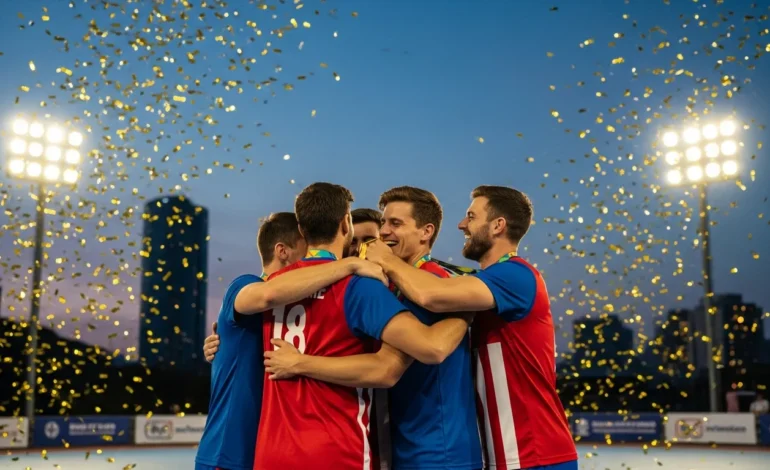
As global powers increasingly utilize athletic excellence as a primary instrument of soft power and national branding, the United States has once again asserted its cultural hegemony on the hardwood. The USA Basketball Women’s 3×3 National Team secured the gold medal at the 2026 FIBA 3×3 World Cup on June 7, narrowly defeating Australia 21-20 in a high-stakes final.
Mikaylah Williams delivered the decisive blow with a clutch 2-pointer that finalized the victory in the closing moments of the match. This triumph followed a defensive masterclass where the American squad held the Australian offense scoreless for the final 45 seconds of regulation.
The gold-medal quartet—comprising Joyce Edwards, MiLaysia Fulwiley, Mikaylah Williams, and Sahara Williams—demonstrated significant psychological fortitude throughout the tournament. USA Basketball officials specifically highlighted the roster’s resilience after surviving a 19-18 overtime thriller against Azerbaijan in the semifinals.
Historical Precedents and the Projection of American Soft Power
This victory marks the fourth gold medal for the U.S. women across the ten editions of the FIBA 3×3 World Cup, following previous successes in 2012, 2014, and 2023. The 2026 tournament served as a strategic precursor to the broader summer sports season in North America, reinforcing the continent’s role as a hub for international athletic competition.
The emergence of Azerbaijan as a top-tier competitor in the 3×3 circuit represents a shift in how smaller nations leverage specialized athletic disciplines to gain international visibility. This trend challenges traditional American dominance, forcing USA Basketball to rely on younger, more versatile prospects to maintain its standing.
Strategic Implications of the 3×3 Format in Global Diplomacy
Unlike traditional 5×5 basketball, the 3×3 format allows for a more decentralized competitive landscape, as evidenced by the high-intensity semi-final matches. The American victory in this context underscores a successful adaptation to a more volatile version of the sport that demands high levels of individual accountability and versatility.
- The team is scheduled to return to the United States on June 9 for a celebratory reception at the Olympic Training Center.
- Mikaylah Williams has emerged as the frontrunner for the tournament’s Most Valuable Player (MVP) award following her consistent offensive output.
- USA Basketball anticipates this victory will catalyze increased investment in domestic 3×3 developmental programs ahead of the next Olympic cycle.
Related Coverage
Frequently Asked Questions
What are the primary differences between 3×3 and traditional 5×5 basketball scoring?
In 3×3 basketball, shots inside the arc are worth one point and shots outside are worth two, whereas traditional basketball awards two and three points respectively.
How does the 21-point rule impact game strategy?
The game ends as soon as a team reaches 21 points or when the 10-minute clock expires, creating a high-intensity environment where offensive efficiency is paramount.
What is the significance of the 2026 tournament venue?
Held as a precursor to the North American summer sports season, the tournament served as a vital marketing tool to bolster domestic interest in urban sports disciplines.