Business Automation Solutions in Singapore: A Plain-English Guide for SMEs
Key takeaway
Business automation solutions in Singapore are software tools that take repetitive work — invoicing, payroll, data entry, customer follow-ups — off your team’s plate. What makes Singapore different from most markets is the funding: the EDGE Grant now gives SMEs up to 70% support for eligible automation and digitalisation projects, so the real cost of adoption is often far lower than the sticker price.
What business automation solutions are
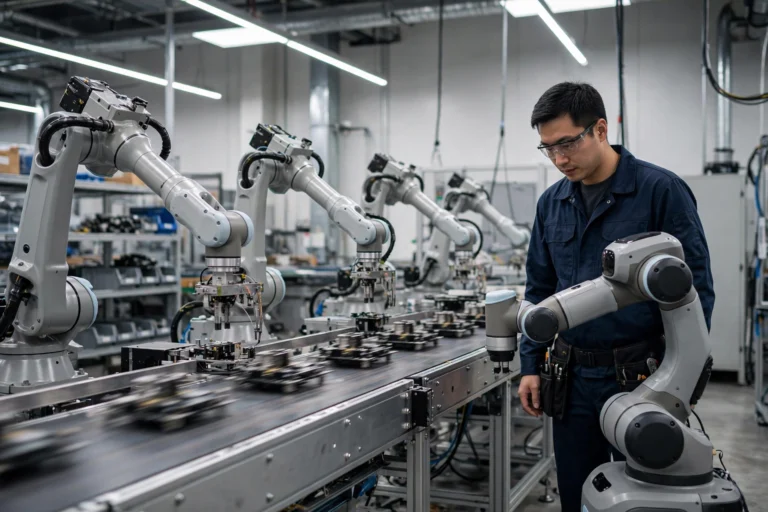
A business automation solution is software that performs a multi-step business task with minimal human involvement. Invoice processing is a common example: instead of someone keying each supplier invoice into an accounting system, the software reads the invoice, matches it against a purchase order, flags exceptions, and posts it to the ledger. The same pattern applies to HR onboarding, leave approvals, customer relationship management, and inventory tracking.
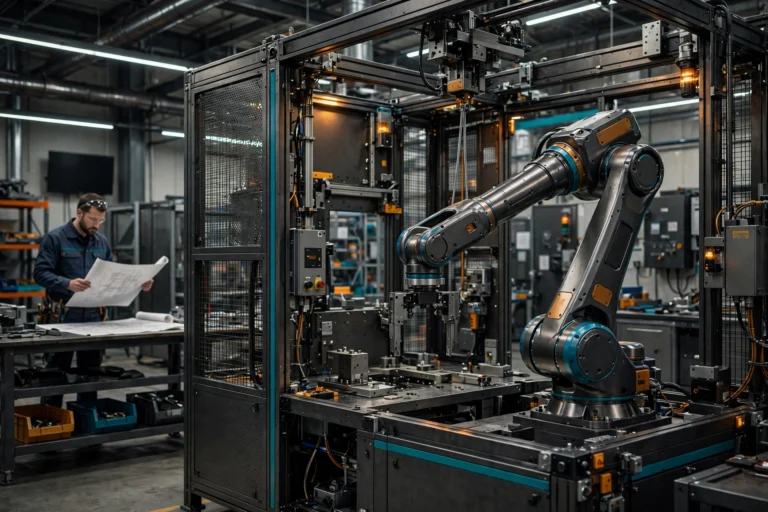
Singapore’s market has two main flavors. The first is off-the-shelf software in pre-approved packages — accounting, CRM, HR, and cybersecurity tools that small companies can adopt quickly. The second is custom automation: robotic process automation (RPA) or AI-assisted workflows built around a company’s specific processes. Around 9 in 10 Singapore enterprises using AI rely on commercial off-the-shelf AI tools, with about 28% customizing those tools for their own needs, according to the IMDA’s 2026 digital economy report (OpenGov Asia, ASEAN Tech & Security).
Why Singapore companies automate now
Three pressures are driving adoption. Labor costs keep rising, AI tools have become far more capable since 2023 — IMDA reports that SME AI adoption rose from 14.5% to 23.4% between 2023 and 2025 — and government co-funding de-risks the investment (OpenGov Asia). IMDA also reports that SMEs using AI-enabled pre-approved digital solutions saw average cost savings of 49.5% in 2025 (ASEAN Tech & Security); that figure is self-reported, so treat it as directional, not guaranteed.
The grant landscape: PSG is over, EDGE is here
This is the single most important fact for Singapore buyers right now. The Productivity Solutions Grant (PSG), the Enterprise Development Grant (EDG), and the Market Readiness Assistance (MRA) grant all stopped accepting new applications on 29 September 2026. From 30 September 2026, they were consolidated into one scheme: the EDGE Grant, administered by Enterprise Singapore (Corporate Services, Info-Tech).
The EDGE basics, as reported by multiple grant advisors:
- Up to 70% support for SMEs and up to 50% for non-SMEs (Corporate Services).
- A S$100,000 cap per company per year, with up to S$30,000 for single-function digital solutions and selected automation activities (Creativeans).
- Covered areas include automation, digitalisation, financial management, innovation, internationalisation, and sustainability (The Financial Coconut).
- It pays out as reimbursement — and you must apply before starting work or paying any deposit, or the project may be disqualified (Creativeans, JustLogin).
- Typical eligibility: registered and operating in Singapore, at least 30% local shareholding for selected solutions, and turnover no more than S$100 million or no more than 200 employees (MyWorkJoy).
If you hold an existing PSG, EDG, or MRA approval, nothing changes — approved projects continue under their original terms and claims can still be submitted (JustLogin).
How to choose a business automation solution
Start with one painful, repetitive process — not a company-wide overhaul. Finance teams often start with invoice and payment automation; HR teams with payroll and leave; sales teams with CRM follow-ups. Pick a process where you can measure the “before” (hours per week, error rate, turnaround time) so the “after” is provable.
Then decide between a pre-approved package and a custom build. Ready-made solutions under programs like SMEs Go Digital are cheaper and faster for standard processes (MyRepublic). Custom automation — custom robotics or RPA setups — fits unusual workflows, but costs more. For background on the wider discipline, see our explainer on automating IT operations.
Analysis: what the EDGE consolidation means for buyers
The following is analysis, not a reported fact. The consolidation looks like a net win: one application, activity-based matching, and higher headline support (up to 70% versus PSG’s 50%). Two frictions remain: the grant reimburses after the fact, so SMEs still need cash flow to front the project cost; and because EDGE launched only on 30 September 2026, exact activity-level caps are still settling — confirm supportability with Enterprise Singapore or an advisor before committing to a vendor.
What is a business automation solution?
A business automation solution is software that carries out repetitive, multi-step business tasks — such as invoice processing, payroll, data entry, or customer follow-ups — with minimal human involvement. It reduces manual work, errors, and turnaround time. In Singapore, these solutions are widely adopted by SMEs, often with government grant support.
How much does business automation cost for an SME in Singapore?
Costs range from a few hundred dollars a month for off-the-shelf software to tens of thousands for custom automation projects. The decisive factor is grant funding: the EDGE Grant offers eligible SMEs up to 70% support for automation and digitalisation activities, capped at S$100,000 per company per year. Funding is paid as reimbursement, so companies must budget for the full upfront cost.
What happened to the PSG grant in Singapore?
The Productivity Solutions Grant (PSG) stopped accepting new applications on 29 September 2026, along with the Enterprise Development Grant (EDG) and Market Readiness Assistance (MRA) grant. From 30 September 2026, all new applications go through a single consolidated scheme called the EDGE Grant. Existing approved projects continue under their original terms.
Which business processes should you automate first?
Start with one repetitive, high-volume process where you can measure results — invoice processing, payroll and leave approvals, or CRM follow-ups are common first picks. Automating a single measurable workflow lets you prove the return before expanding. Avoid company-wide automation as a first project; narrow scope de-risks both the budget and the disruption.
Sources
- Corporate Services — Singapore Regulatory Updates: September 2026 (EDGE Grant replaces EDG, PSG and MRA)
- Creativeans — EDGE Grant 2026: What Replaced EDG, PSG and MRA
- Info-Tech — EDGE Grant Singapore 2026: Application, Rules and Uses
- The Financial Coconut — EDGE Grant Singapore: What SMEs Must Do
- OpenGov Asia — Singapore’s Digital Economy Reaches 19.3% as AI Adoption Deepens
- ASEAN Tech & Security — IMDA report: Singapore’s digital economy reaches 19.3% of GDP in 2025
- JustLogin — The Complete Guide to Singapore’s Digitalisation Grants
- MyRepublic — The ultimate guide to digital transformation for Singapore SMEs (2026)
- MyWorkJoy — PSG Grant Singapore: Essential Funding Guide for SMEs