Georgia GOP Leaders Block Trump’s 2028 Redistricting Push Following Runoff Splits
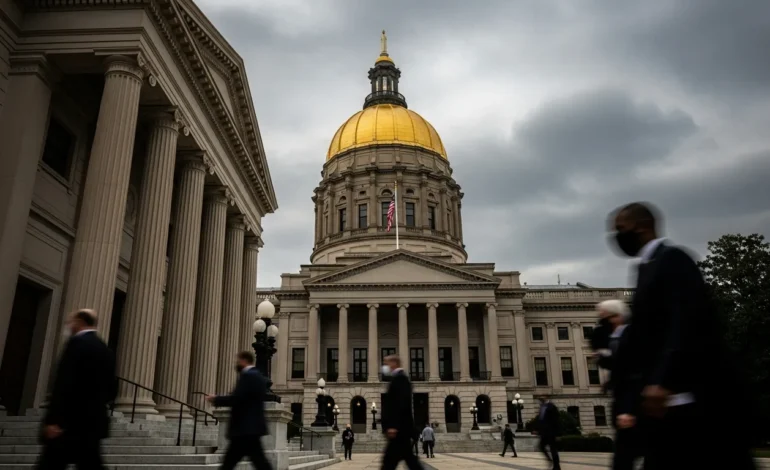
For the Republican leaders gathered in a quiet committee room at the Georgia State Capitol on Wednesday, the decision was less about policy and more about a calculated assertion of state independence. Legislative leaders officially blocked a request from President Donald Trump to convene a special session for 2028 redistricting, marking a rare and public break from the White House.
The refusal, finalized on June 17, 2026, directly counters the administration’s national strategy to redraw voter boundaries ahead of the next major election cycle. House and Senate leadership cited a commitment to “stability and adherence to the 10-year census cycle” as the primary reason for maintaining the current maps.
Runoff Results Embolden Establishment
This defiance follows a Tuesday primary runoff that sent mixed signals to the GOP base across the state. While voters backed Collins for the Senate, they notably rejected the candidate Trump endorsed for governor, signaling a potential shift in the electorate’s appetite for federal interference in local races.
The split results appear to have provided the political cover necessary for the Georgia Assembly to move toward blocking further changes. Party leaders held a brief session on the matter before closing the door on the President’s redistricting methodology.
Legal and Political Risks of Mid-Decade Shifts
Legal experts caution that any attempt to redraw districts mid-decade would trigger immediate and costly litigation in federal courts. These challenges would likely argue that such moves violate established redistricting principles and the Voting Rights Act.
- The decision was reached during a closed-door meeting at the State Capitol in Atlanta.
- Establishment leaders are currently at odds with the Trump-aligned ‘Freedom’ caucus over the timing of the maps.
- Governor Brian Kemp has not yet issued a formal statement regarding the legislative leadership’s refusal.
The move suggests Georgia’s GOP is pivoting toward a defensive posture to protect current incumbents rather than risking a total map overhaul. This strategy aims to avoid judicial scrutiny that could potentially result in maps less favorable to the Republican majority.
Related Coverage
- Deep Dive: Georgia’s High-Stakes June 16 Runoff Results
- Local Impact: Georgia Activists Demand Safety Mandates Amid Record Heat
Frequently Asked Questions
Why did the Georgia GOP reject the redistricting request now?
Leaders cited the need for stability and a desire to follow the traditional 10-year census cycle rather than engaging in mid-decade changes that could be overturned by courts.
How did the June 16 runoffs influence this decision?
The mixed results, specifically the defeat of a Trump-backed gubernatorial candidate, suggested to state leaders that the President’s influence over Georgia voters might be waning, allowing them more room to disagree with his mandates.
What is the role of the Freedom caucus in this dispute?
The Freedom caucus represents the Trump-aligned wing of the Georgia Republican Party and continues to push for the special session, creating a significant internal rift with the establishment leadership.
Will Governor Brian Kemp intervene?
While Kemp has the power to call a special session, his silence following the June 17 decision suggests he may be aligned with legislative leaders or is waiting to gauge further public reaction.