Drought-Fueled Cottonwood Fire Claims Title as Nation’s Largest Active Blaze
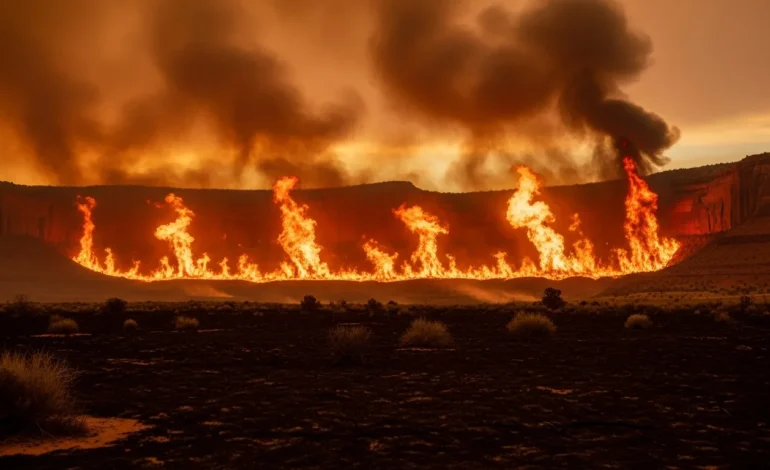
The Cottonwood Fire officially became the largest active wildfire in the United States on Sunday, June 28, 2026, as extreme drought and high winds pushed the blaze through more than 144 square miles of southwest Utah. The inferno has already decimated critical infrastructure at the Eagle Point ski resort and destroyed multiple summer cabins across the rugged terrain of Beaver County.
Utah Governor Spencer Cox issued an urgent public plea for rain and the safety of frontline responders via social media as the fire remained uncontained. Cox described the current situation as “bleak,” though he noted that hundreds of firefighters had achieved several “miraculous saves” of properties in the fire’s path.
Extreme Weather Conditions Hamper Containment
High winds on Sunday significantly accelerated the fire’s movement through mountain canyons while simultaneously grounding the firefighting air fleet. Wind gusts reached speeds of 45 mph, creating conditions too dangerous for air crews to maintain their tactical water and retardant drops.
The fire is fueled by a landscape that authorities described as already parched following Utah’s warmest winter and a record-low snowpack. AP photographer Noah Berger documented the fire’s aggressive run over the weekend, capturing massive smoke billows as the blaze marched through the Fishlake National Forest.
Impact on Local Communities and Infrastructure
While damage assessment teams are currently on the ground, a final count of destroyed homes in the sparsely populated areas of Beaver County has not yet been released. Residents on the flanks of the blaze reported seeing ash fall from the sky as the fire moved toward the communities of Marysvale, Junction, and Circleville.
- A firefighting helicopter was documented dropping water near Marysvale on Saturday, June 27, before wind conditions deteriorated.
- The Eagle Point ski resort has suffered significant property loss and is expected to remain closed for a considerable period.
- More than 1,300 residents remain under evacuation notices as crews prioritize structural protection in the Tushar Mountains.
A Historic Shift in Fire Behavior
The Cottonwood Fire represents one of the most destructive events in Utah state history based on infrastructure loss and rapid rate of spread. State foresters indicate that the fire is defying historical expectations, driven by single-digit humidity levels and the lack of moisture typically provided by spring runoff.
Frequently Asked Questions
What caused the Cottonwood Fire?
Preliminary investigations by fire marshals suggest the blaze was human-caused rather than ignited by lightning. The specific origin point near the Cottonwood Campground remains under active investigation.
Which areas are currently under evacuation orders?
Mandatory evacuations are in effect for Eagle Point Resort, Merchant Valley, and the HiLo Estates. Residents in Marysvale and Junction have been placed on “Set” status, meaning they should be prepared to leave immediately.
Is the fire affecting air quality in Utah’s National Parks?
Smoke has primarily pushed east and northeast, resulting in haze over Bryce Canyon National Park. However, air quality at Zion National Park to the south has remained largely unaffected by the plume.