Extreme Heatwave Tests U.S. Infrastructure and 2026 World Cup Logistics
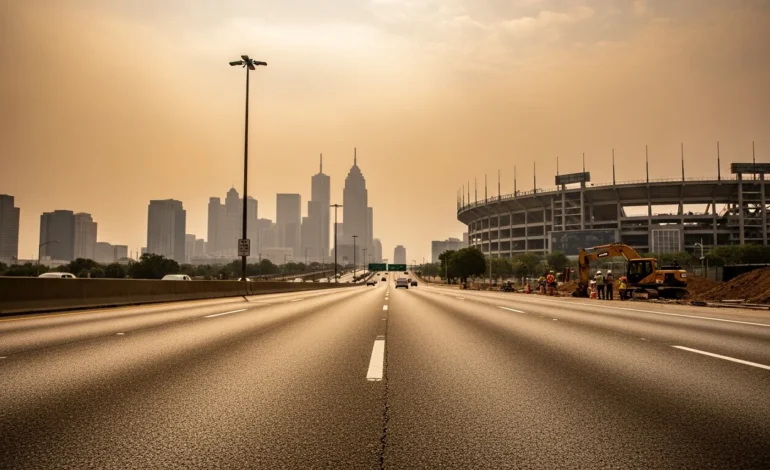
The increasing frequency of extreme thermal events has forced a global reassessment of urban infrastructure resilience, a reality underscored by today’s massive heatwave across the United States. On Tuesday, June 30, 2026, more than 150 million Americans from Kansas to Maine were placed under dangerous heat alerts as record-breaking temperatures swept across the Midwest and Northeast.
Meteorologist Lee Goldberg and reporter Faith Abubey tracked the atmospheric stagnation, identifying multiple metropolitan areas where forecast highs are expected to shatter historical benchmarks. This prolonged weather pattern has created a continuous corridor of extreme heat that threatens both domestic energy security and international logistical operations.
Infrastructure Strain and the Wet-Bulb Threshold
Energy grids are currently undergoing rigorous stress tests as demand for air conditioning pushes regional power systems to their absolute limits. Grid operators in the PJM and MISO regions have issued conservation notices to prevent rolling blackouts during peak hours as consumption reaches historic levels.
Public health officials are specifically monitoring “wet-bulb” temperature readings, which measure the human body’s ability to cool itself through evaporation in high humidity. When these readings exceed critical thresholds, even healthy individuals face a high risk of heat stroke, necessitating the activation of emergency cooling centers in cities across the affected regions.
- More than 150 million citizens currently under official heat advisories or warnings.
- Record peak demand recorded on the Eastern Interconnection energy grid.
- Wet-bulb globe temperatures (WBGT) reaching hazardous levels in non-air-conditioned venues.
- Municipal cooling centers transitioned to 24-hour operations in major transit hubs.
Geopolitical and Sporting Implications for the World Cup
The heatwave coincides with the ongoing 2026 FIFA World Cup, forcing tournament organizers to implement emergency cooling breaks and reconsider match scheduling for athlete safety. Analysts suggest that 14 of the 16 match venues are currently experiencing conditions that could impair elite athletic performance or endanger spectators in open-air stadiums.
The intersection of extreme climate and high-profile international diplomacy highlights the growing necessity for climate-adaptive infrastructure in host nations. This event is expected to accelerate the adoption of “Climate-Safe Zones” as a mandatory requirement for future international tournament bids, shifting the liability frameworks for global sporting bodies.
Related Coverage
- emergency safety mandates for record temperatures
- soccer’s rising prominence ahead of the 2026 World Cup
Frequently Asked Questions
How do modern energy grids prioritize power during record heat?
Grid operators utilize demand response programs that provide financial incentives for industrial users to reduce consumption, ensuring that residential air conditioning and critical hospital systems remain functional during peak hours.
What specific medical protocols have been added for the 2026 World Cup?
FIFA has introduced mandatory biometric monitoring for players to detect early signs of heat exhaustion and has authorized the use of portable cooling stations on the sidelines for all non-air-conditioned stadiums.
Why is humidity considered more dangerous than dry heat for this event?
High humidity prevents sweat from evaporating, which is the primary mechanism the human body uses to regulate internal temperature; without evaporation, the body’s core temperature can rise to lethal levels in a matter of minutes.
Will future U.S. infrastructure projects be impacted by these 2026 readings?
Federal agencies are expected to revise building codes and energy resilience standards based on the wet-bulb duration data collected during this event, potentially requiring higher efficiency cooling systems in all new public constructions.